2026-10-15 ·
How to Inspect for Hidden Moisture in Wilmington Attics Post-Storm
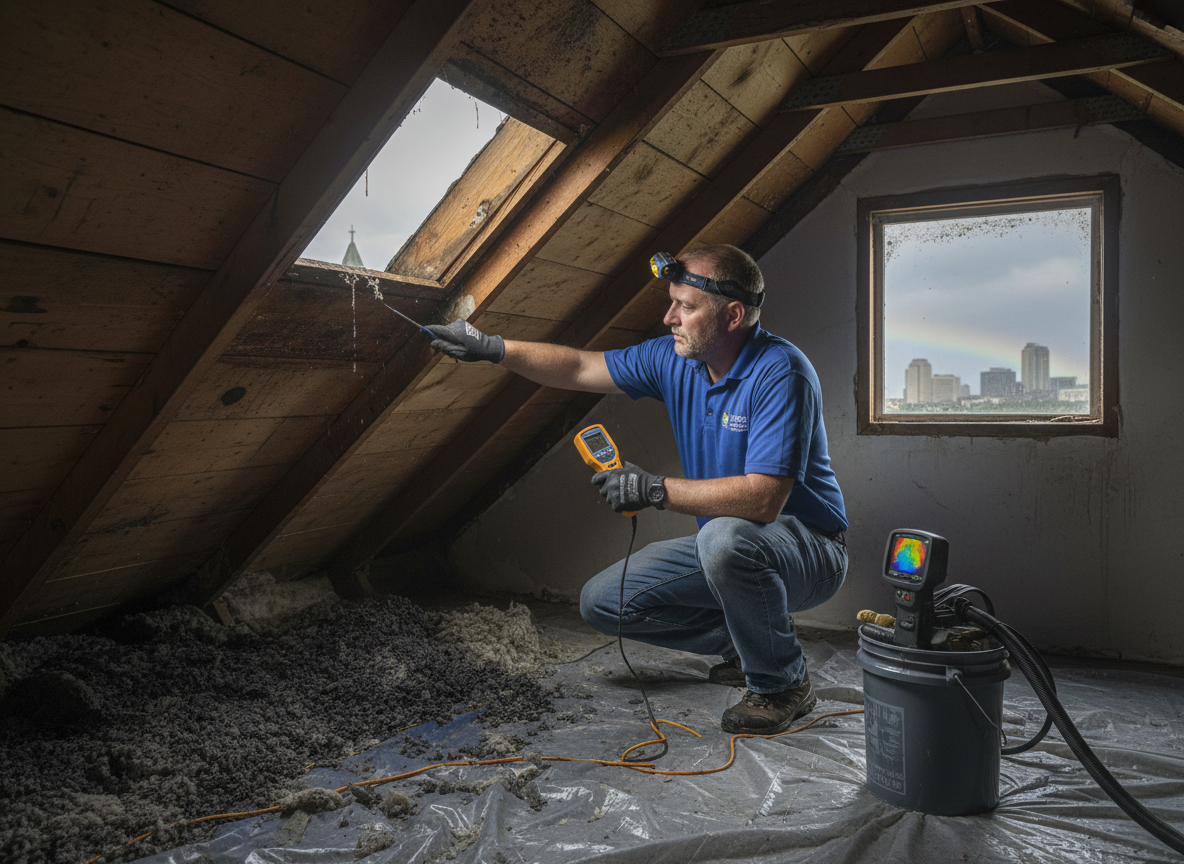
Begin your inspection within 48 hours after any storm by entering the attic and scanning insulation and wood with a moisture meter for readings above 15 percent. Wilmington's older housing stock near Downtown Wilmington and the Banning Park area often features older roof vents that allow wind-driven rain to reach hidden spots during rare but intense winter rains.
Accessing the Attic Safely
Clear a path through stored items before climbing the ladder to avoid disturbing settled dust that could mask water stains. In homes around Wilmington Waterfront Park, low-slope roofs common to the Port of Los Angeles vicinity trap water along eaves where it seeps into rafters. Wear a headlamp and move slowly across ceiling joists to prevent falling through drywall softened by leaks. Check the underside of the roof deck for dark streaks or warped sheathing, which signal water entry points that dry summers in Los Angeles county do not always evaporate quickly. Note any musty odors near the Banning Park area that linger after the rain stops.
Testing Insulation and Wood
Push a moisture meter probe into fiberglass batts at multiple points along the north and south slopes where storms typically hit hardest. Readings between 15 and 20 percent indicate surface dampness that may dry on its own, while anything above 25 percent requires immediate removal to stop mold growth. Examine rafters and collar ties for discoloration or soft spots, especially in homes built before 1970 that line streets near the Port of Los Angeles. Lift sections of insulation carefully to inspect the ceiling drywall below for water rings that spread from ceiling water damage repair needs. In the Carson and Long Beach border zones, salt air accelerates corrosion on metal fasteners, so look for rust streaks running down from nail heads.
Identifying Hidden Moisture Sources
Trace any wet spots back to roof penetrations such as plumbing vents or skylights that fail during gusty storms common to the Wilmington waterfront. Pay special attention to areas above bathrooms and kitchens where pipe condensation combines with storm leaks. Use a thermal camera if available to spot cooler patches in the insulation that retain moisture longer than surrounding dry material. Homes in the Banning Park area often have limited attic ventilation, so stagnant air keeps relative humidity high even after the rain ends. Document every location with photos and notes so you can track whether readings drop over the next several days.
Next Steps and Professional Help
If moisture persists beyond five days or you find active mold, contact a specialist for attic mold remediation before spores spread through the living space. For broader concerns after flooding, review preventing mold growth after minor flooding on Wilmington's low streets to understand how local terrain affects drying times. Schedule water damage mitigation if multiple areas show elevated readings. Keep records of your inspection to share with any restoration crew working in the Los Angeles county region.
Monitoring After Initial Checks
Re-test the same insulation spots seven days later to confirm levels have dropped below 12 percent. Install a small hygrometer in the attic to track humidity trends during the dry summer months that follow winter storms. If readings stay elevated near the Port of Los Angeles corridor, improve soffit and ridge vents to increase airflow. This ongoing habit helps Wilmington homeowners avoid repeated issues in older homes that lack modern vapor barriers.