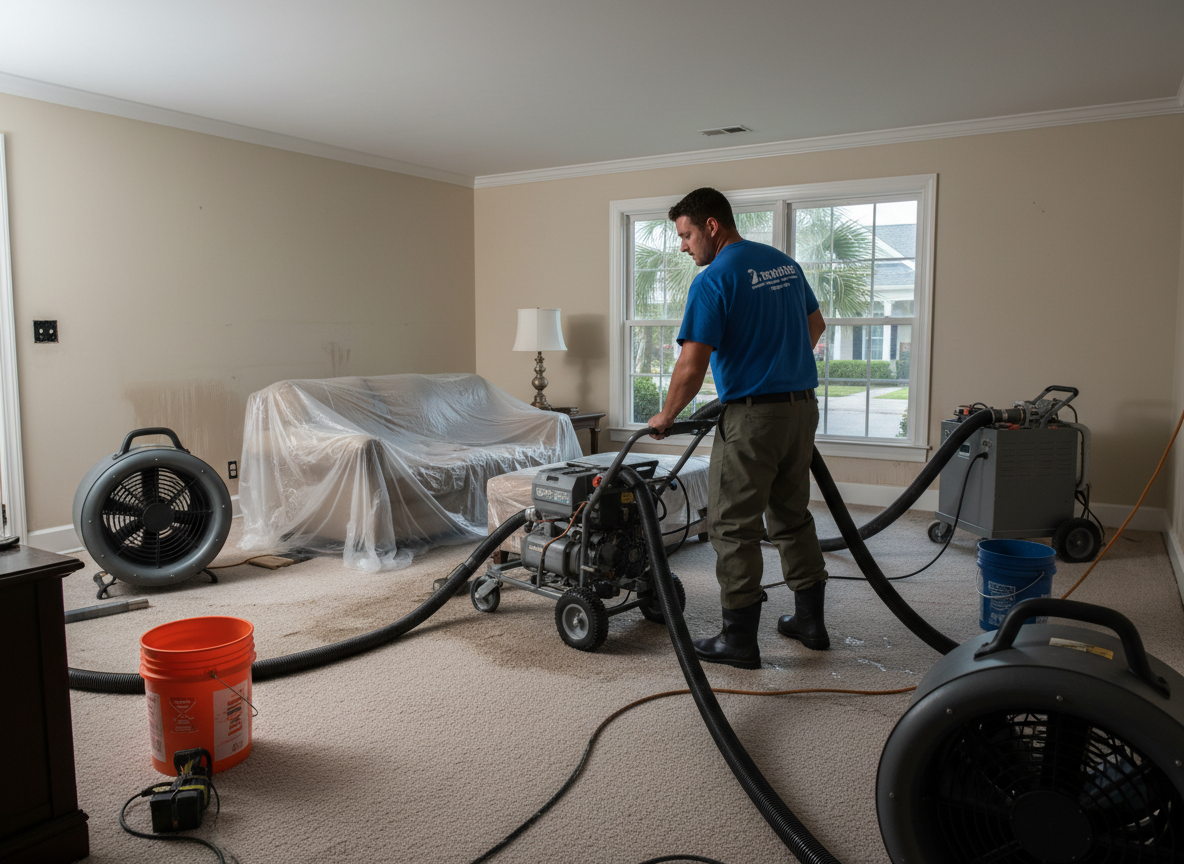
Water damage mitigation in Wilmington focuses on rapid extraction and drying before mold sets in older housing stock common in the Banning Park area and Downtown Wilmington. These homes, built decades ago near the Port of Los Angeles, often feature plaster walls and raised foundations that trap moisture from plumbing leaks or coastal humidity. Crews isolate affected zones with containment barriers and use moisture meters to map hidden saturation in subfloors and wall cavities that dry summers can mask until damage spreads.
Los Angeles County properties near Wilmington Waterfront Park face unique challenges from occasional heavy rains after long dry periods, allowing water to migrate along soil lines into crawl spaces. Mitigation crews prioritize negative air machines and dehumidification tailored to the mild Mediterranean climate to prevent warping in hardwood floors typical of Carson-adjacent homes. Delaying these steps risks structural compromise that affects nearby Long Beach properties sharing similar terrain and water tables.
Edge cases include hidden leaks behind stucco exteriors common in the area, where water travels along utility lines into adjacent units. Proper documentation of moisture levels before and after drying supports insurance claims while avoiding unnecessary demolition in older Los Angeles County construction.
Technician insight
In Wilmington, the thing that catches most people out with water damage mitigation is how dry summers let small leaks in Banning Park area plaster walls go unnoticed until moisture reaches the slab and migrates under nearby flooring. Homeowners often skip checking behind baseboards after a minor overflow, but the older raised foundations here let water travel far before showing up.
Hidden Leak Behind Stucco
A homeowner in the Banning Park area noticed buckling baseboards after a weekend rain. Inspection found water had entered through a stucco crack, traveled along the foundation, and saturated subflooring toward the rear rooms. Crews contained the space, extracted water, and ran drying equipment for five days until readings normalized, preventing mold growth into the adjacent hallway.
How it works
- 1
Initial Assessment
Technicians arrive within hours, document visible water paths, and use meters to locate saturation in walls and floors.
- 2
Containment Setup
Plastic barriers and negative pressure isolate the affected zone to stop moisture migration into unaffected rooms.
- 3
Water Extraction
Submersible pumps and wand extractors remove standing water from carpets, hardwood, and concrete slabs.
- 4
Drying and Monitoring
Industrial air movers and dehumidifiers run while daily moisture readings track progress until levels return to normal.
Pricing
Upfront quotes based on inspection; final cost depends on square footage, water category, and drying duration.