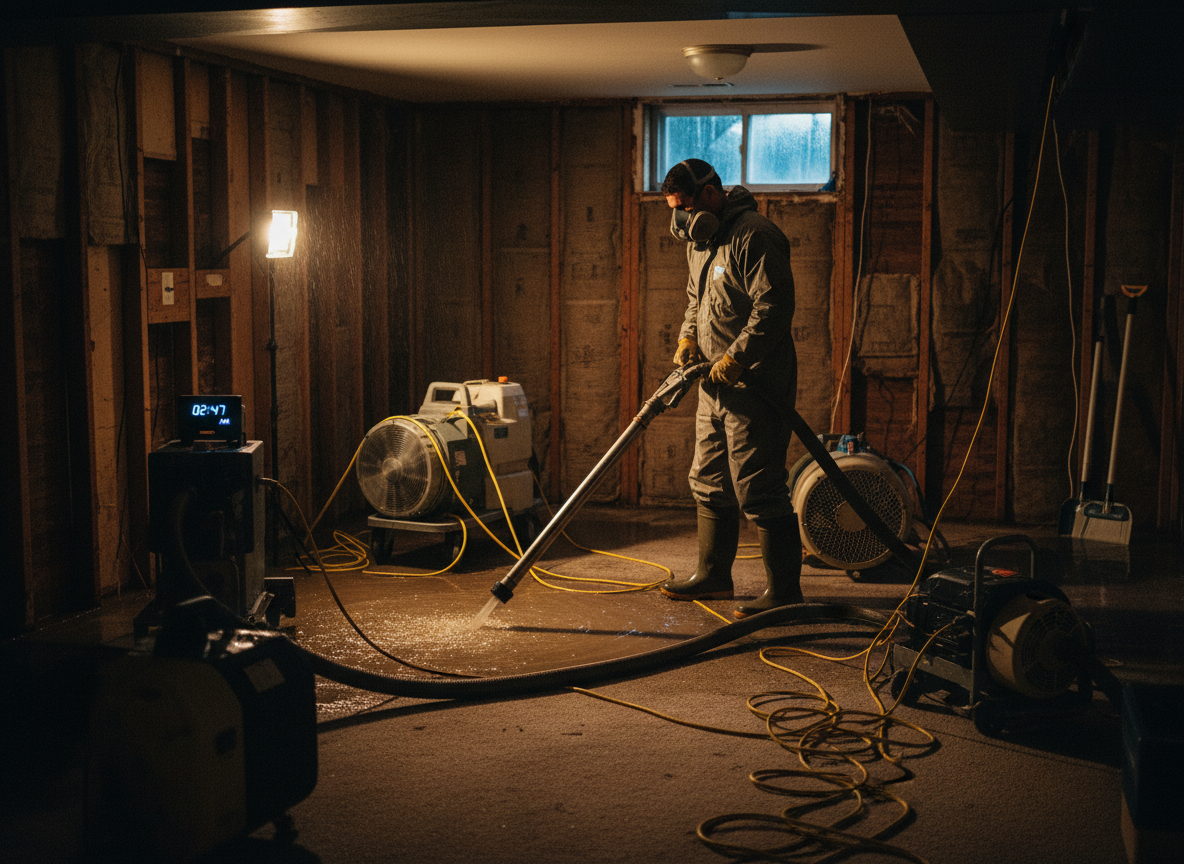
Wilmington sits in Los Angeles County with older housing stock near the Port of Los Angeles and Banning Park that often features slab foundations and aging plumbing. When pipes fail during the occasional winter rains that follow the mild Mediterranean dry summers, water travels under slabs and into wall cavities quickly. Technicians must pull baseboards and drill weep holes early because moisture trapped against the port's salty air leads to hidden mold within days. Working from 500 Delaware Ave on a 24/7 schedule lets crews reach Downtown Wilmington and the Banning Park area before saturation spreads into neighboring Carson or Long Beach properties.
Extraction equipment must handle both fresh water and occasional brackish intrusion from waterfront properties near Wilmington Waterfront Park. Crews stage dehumidifiers sized for the small lots and tight setbacks common in these neighborhoods, running them continuously while monitoring moisture meters in plaster and lathe walls. Edge cases include post-1940s homes where knob-and-tube wiring sits behind wet plaster; any restoration plan requires shutting off power before drying begins. Local building codes in Los Angeles County also require permits for structural drying that affects load-bearing elements, so documentation starts the moment crews arrive.
Homeowners often delay calling after small leaks because summers stay dry, yet the first heavy rain can turn a slow drip into widespread damage under concrete slabs. Restoration teams carry portable generators because power outages near the port are common during storms. Drying times stretch longer in the humidity that rolls in from the harbor, so crews place sensors in multiple rooms and return daily rather than guessing when a home is ready for rebuild.
Insurance adjusters familiar with Wilmington require photos of every affected joist and subfloor before approving replacement. Crews document each step with time-stamped images to avoid disputes later. This level of detail protects owners in the Banning Park area where many homes still carry original hardwood that warps permanently if left wet overnight.
Technician insight
In Wilmington, the thing that catches most people out with 24-hour water restoration near me is how fast moisture travels under the old slab foundations once winter rain hits. Homes near the Port of Los Angeles sit on compacted fill that holds water against the concrete, so a small leak in the Banning Park area can saturate subfloors two rooms away before anyone notices. Skipping the weep-hole step or pulling equipment too soon always leads to callbacks when the harbor humidity keeps readings high.
Slab Leak After Winter Rain
A homeowner in the Banning Park area noticed damp carpet after a storm. We found a slab leak that had traveled under the foundation into two bedrooms. Extraction and targeted drying with daily meter checks dried the home without removing the original hardwood. The property passed final inspection and avoided mold growth common in the area's older stock.
How it works
- 1
Emergency Call Intake
Dispatch takes the call 24/7 and gathers details on water source and affected rooms while routing the nearest crew from Wilmington.
- 2
On-Site Assessment
Technicians arrive, locate the source, map moisture with meters, and note any port-related humidity factors before starting extraction.
- 3
Water Removal and Containment
Pumps and wands pull standing water; plastic barriers go up to protect unaffected areas in tight Downtown Wilmington lots.
- 4
Drying and Monitoring
Air movers and dehumidifiers run while daily meter checks track progress in slab and wall cavities until readings match unaffected rooms.
- 5
Final Clearance
Once dry, crews remove equipment, provide documentation for insurance, and advise on any needed repairs before handing the home back.
Pricing
Upfront quotes after inspection; final cost depends on water volume, affected square footage, and drying duration required by local conditions.