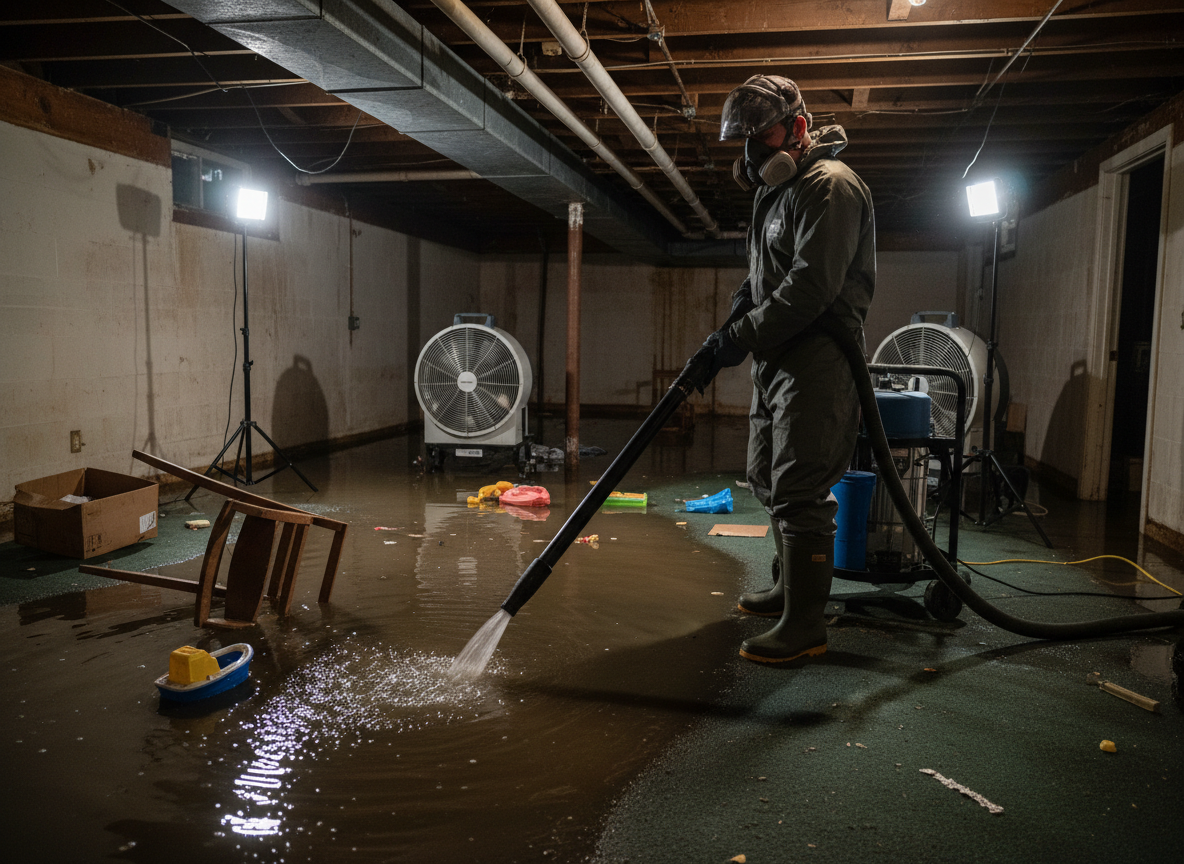
Wilmington's housing stock includes many pre-1960 homes in the Banning Park area and Downtown Wilmington where galvanized pipes and slab foundations are common. When a sudden leak hits, water migrates under the slab and into the clay-heavy soil typical around the Port of Los Angeles, making complete extraction harder than in newer Long Beach builds. Our crews use subfloor moisture meters and targeted negative air to pull water before it reaches adjacent units in these denser neighborhoods.
The mild Mediterranean climate with dry summers means most emergency calls come from pipe failures or appliance leaks rather than storms, yet once water enters older crawl spaces it evaporates slowly and feeds hidden mold. We stage equipment along narrow driveways common in Banning Park and monitor humidity daily because coastal air keeps ambient moisture higher than inland Los Angeles County spots. Skipping these steps often leads to callbacks weeks later when homeowners notice musty odors near Wilmington Waterfront Park.
Code compliance in Los Angeles County requires documenting moisture levels before and after work on any structure over fifty years old. We photograph every affected joist and record readings so insurance adjusters see exactly what was removed versus what stayed dry. This documentation protects residents in the port-adjacent blocks where older homes sit close together and water can travel through shared walls.
Technician insight
In Wilmington the thing that catches most people out with emergency water removal is the way water travels under the older slab foundations around Banning Park and then wicks back up through the clay soil weeks later when the dry summer air finally shifts.
Slab leak in Downtown Wilmington
A homeowner noticed water pooling near the front door after an overnight pipe failure. We found migration under the 1950s slab extending toward the shared wall with the next unit. Extraction and targeted drying prevented spread into the neighboring property and kept readings below threshold for insurance documentation.
How it works
- 1
On-site assessment
Technician arrives within the hour, maps water migration through slabs and walls in Wilmington homes, and identifies hidden pockets near Banning Park foundations.
- 2
Water extraction
High-volume pumps and wands remove standing water from carpets, hardwood, and subfloors before it spreads to neighboring units.
- 3
Drying and monitoring
Air movers and dehumidifiers run in place while daily moisture readings confirm levels drop below 15 percent in the clay soil zones typical of the area.
- 4
Final clearance
Final walkthrough with documented readings and photos for insurance, confirming no residual moisture remains in older Wilmington housing.
Pricing
Pricing depends on water volume, affected square footage, and access constraints in older Wilmington homes; we provide an upfront scope before starting.