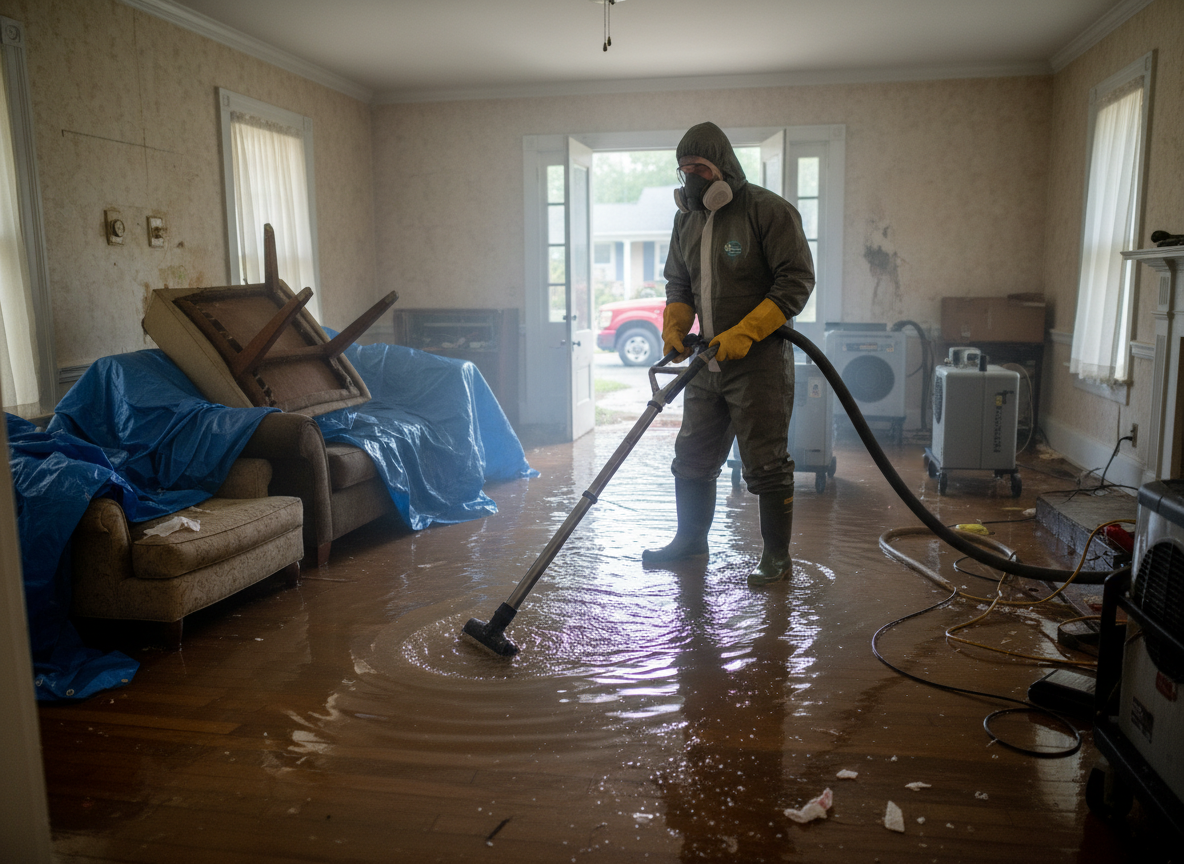
Wilmington sits in Los Angeles County with a mild Mediterranean climate that brings dry summers and occasional intense winter rains. These rains often overwhelm older homes in the Banning Park area and Downtown Wilmington where many properties date to the mid-20th century and still have original cast-iron or galvanized lines. When a supply line bursts or a roof leak develops near the Port of Los Angeles, water travels quickly through slab foundations and into wall cavities before residents notice.
Emergency water cleanup here requires immediate extraction because the dry climate means hidden moisture lingers and feeds mold within 48 hours. Crews focus on the waterfront neighborhoods where high water tables and compacted soil slow natural drainage. Equipment must reach behind lath-and-plaster walls common in these homes without creating dust that could affect nearby port workers or traffic on nearby streets leading to Long Beach and Carson.
Technicians also watch for cross-contamination from industrial runoff near the port. They isolate affected zones, use moisture meters on concrete slabs, and document every step for insurance adjusters who routinely handle claims from this corridor. Skipping these steps leaves salts and silt that corrode new finishes months later.
Local Drainage Challenges
Wilmington's flat terrain near Wilmington Waterfront Park means water pools against foundations during rare heavy storms. Homes built before modern grading codes often lack proper French drains, so cleanup crews must address both the interior water and the exterior grading that funnels more moisture back toward the structure.
Technician insight
In Wilmington the thing that catches most people out with Emergency water cleanup is how quickly water travels under the slab in older Banning Park homes when the dry summer soil suddenly gets hit by a winter downpour. Homeowners often stop at visible puddles and miss the moisture that has wicked into the subfloor toward the Port of Los Angeles side of the property.
Burst Supply Line in Banning Park Home
A kitchen supply line failed overnight in a 1950s bungalow near Banning Park. Water migrated under the slab and into the adjacent living room. Crews extracted standing water, placed drying equipment, and monitored readings for four days until levels matched the unaffected bedrooms. The homeowner avoided mold growth and returned to normal use without structural repairs.
How it works
- 1
Arrival and Containment
Technicians arrive within the hour, shut off water sources, and set up containment barriers to stop migration into unaffected rooms.
- 2
Water Extraction
Truck-mounted and portable pumps remove standing water from carpets, hardwood, and slab surfaces in Banning Park homes.
- 3
Drying and Monitoring
Industrial air movers and dehumidifiers run while moisture readings are tracked daily until levels match unaffected areas.
- 4
Sanitizing and Documentation
Antimicrobial treatment is applied where needed and a full moisture map is prepared for insurance.
- 5
Final Inspection
A walkthrough confirms all materials are dry before equipment is removed and the space is returned to the homeowner.
Pricing
Upfront quotes provided after inspection; final cost depends on water volume, affected square footage, and drying time required.