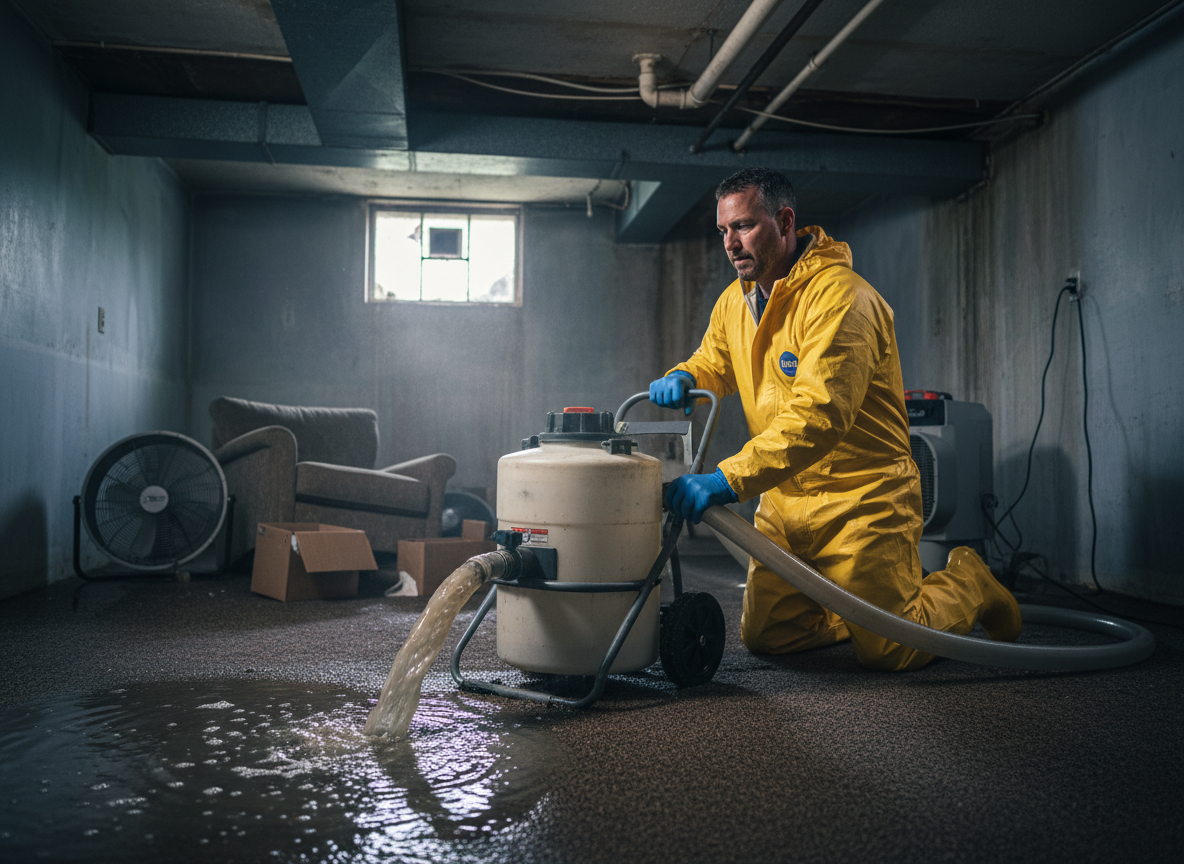
Wilmington’s older housing stock around Downtown Wilmington and the Banning Park area often features slab foundations and aging plumbing that can fail without warning. When a pipe bursts or an appliance leaks, water quickly pools under flooring and cabinets. Our extraction process uses truck-mounted pumps and moisture meters to pull water from both visible surfaces and hidden cavities before mold sets in. The mild Mediterranean climate means dry summers do little to evaporate trapped moisture, so mechanical removal is essential.
Proximity to the Port of Los Angeles and nearby Carson and Long Beach brings higher humidity levels that slow natural drying. We stage air movers and dehumidifiers immediately after extraction to drive moisture out of drywall, subfloors, and insulation. In the Banning Park neighborhood, narrow lots and shared walls can let water migrate between units, requiring careful mapping of affected areas. We document every step with photos and readings so homeowners can see exactly where water traveled.
Wilmington Waterfront Park and surrounding low-lying spots sometimes see water intrusion during heavy winter rains that overwhelm older storm drains. Extraction crews must work around tight access points common in these post-war homes. We cut small inspection holes only when needed and seal them properly afterward. This targeted approach limits disruption while ensuring water is fully removed from wall cavities and under sinks.
Technician insight
In Wilmington the thing that catches most people out with water extraction is how fast moisture travels under the slab foundations common in Banning Park homes. A small kitchen leak can wick across the entire living room before anyone notices because the dry summers give no help evaporating it.
Slab Leak Near Banning Park
A homeowner in the Banning Park area noticed damp carpet near the kitchen. We found a slab leak that had sent water under the entire dining room. Extraction removed several gallons from beneath the flooring and baseboards. Targeted drying prevented mold growth and the floor was saved.
How it works
- 1
Arrival and Assessment
Technician arrives within hours, locates the water source, and maps moisture with meters across affected rooms.
- 2
Standing Water Removal
Truck-mounted pumps and portable extractors pull bulk water from floors, carpets, and low areas first.
- 3
Hidden Moisture Extraction
We pull water from under cabinets, behind baseboards, and within wall cavities using specialized wands and attachments.
- 4
Drying Setup
Air movers and dehumidifiers are positioned based on readings to finish drying before any reconstruction begins.
Pricing
Cost depends on the volume of water, number of affected rooms, and how far moisture has traveled into walls or under floors.