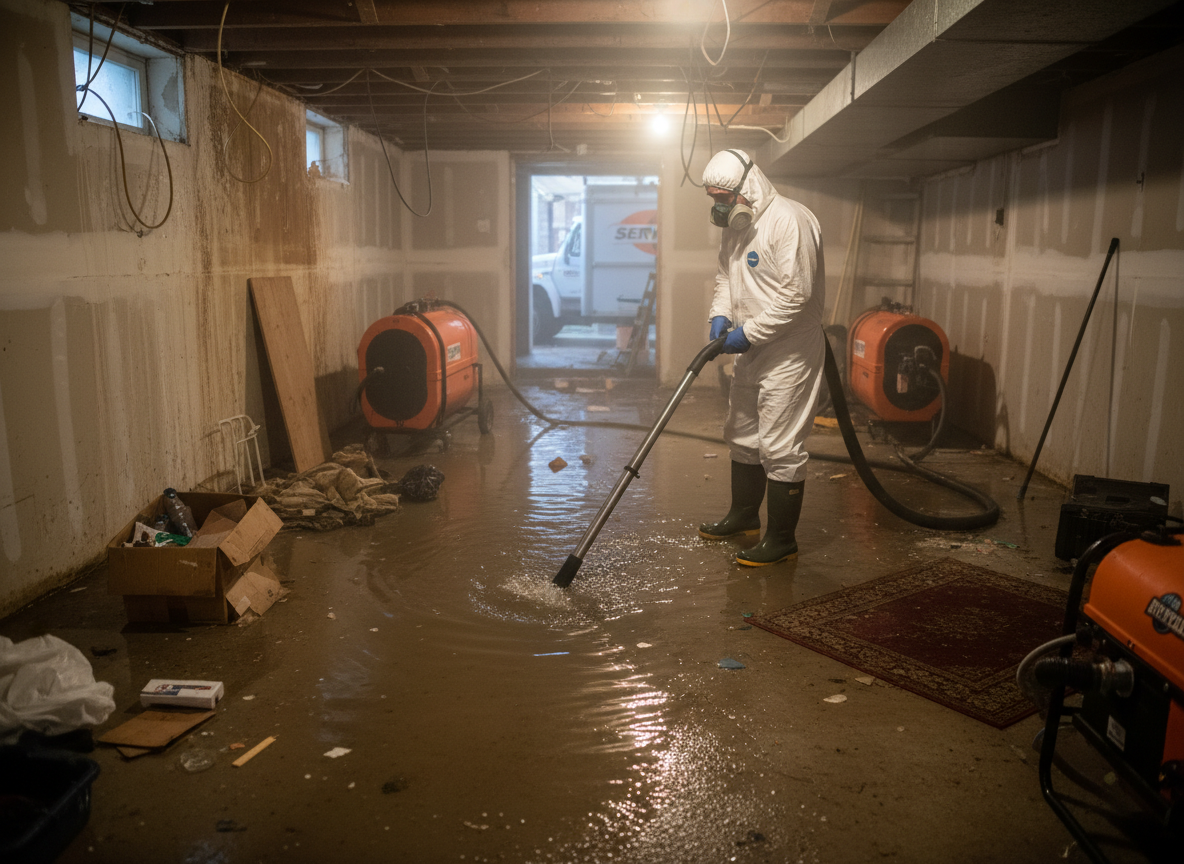
Wilmington's older housing stock near Banning Park and the waterfront often features raised foundations on compacted fill soil that can shift during rare winter downpours. When basements take on water, crews must first map the exact entry points because the mild Mediterranean climate means most properties lack the drainage systems common in wetter regions. Hidden pockets of moisture behind concrete block walls or under slab-on-grade floors frequently lead to secondary mold if extraction stops too soon.
Technicians use moisture meters and infrared cameras to locate saturation in the dense clay soils common around the Port of Los Angeles. Carpet pad and drywall below the flood line are removed to prevent wicking, while dehumidifiers sized for the small, enclosed basement spaces run continuously. Homes in the Banning Park area sit close to tidal influences, so any standing water must be tested for salinity that can corrode electrical boxes and metal framing.
After water removal, crews focus on airflow through limited basement windows and doors to avoid pushing humid air into living areas above. In Carson-adjacent blocks, older cast-iron plumbing can fail at the same time as surface flooding, requiring separate tracing of clean versus contaminated water. Final clearance includes checking subfloor joists for warping before any new finishes are installed.
Because Wilmington experiences long dry summers, homeowners sometimes delay calling until odors appear weeks later. Early intervention prevents the need to open larger sections of wall shared with neighboring properties in dense Downtown Wilmington blocks.
Technician insight
In Wilmington, the thing that catches most people out with Basement flood cleanup is the high water table near the Port of Los Angeles combined with older block foundations around Banning Park. Moisture wicks back up into walls days after extraction if crews skip daily meter checks on the dense local soil.
Winter Rain Flood in Banning Park Basement
Water entered a Banning Park home through foundation cracks after a rare heavy rain. We found saturated carpet and lower drywall plus elevated moisture in the slab. Extraction, targeted drying, and antimicrobial treatment restored the space; the owner avoided mold growth that often appears weeks later in these older homes.
How it works
- 1
Initial Assessment
Technicians inspect the basement for water depth, entry points, and affected materials while checking for electrical hazards.
- 2
Water Extraction
Pumps and wet vacuums remove standing water, followed by removal of saturated carpet, pad, and lower drywall sections.
- 3
Drying and Dehumidification
Air movers and commercial dehumidifiers dry the space, with moisture readings taken daily until levels return to normal.
- 4
Sanitization and Restoration
Antimicrobial treatment is applied, then subfloors and walls are prepared for repairs or new finishes.
Pricing
Upfront quotes after inspection account for water volume, access limits in older Wilmington basements, and any hidden damage behind walls.