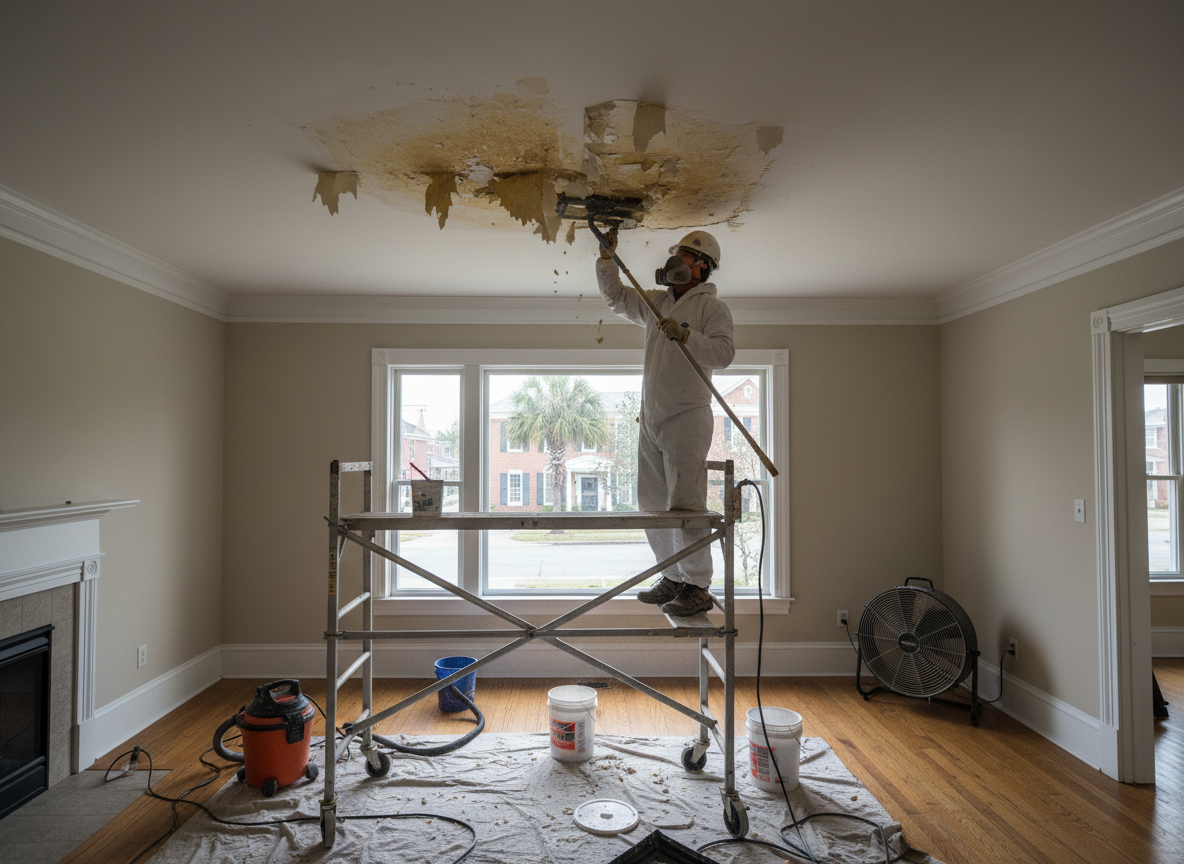
Wilmington's older housing stock, especially mid-century homes around Banning Park, often features plaster ceilings that conceal water migration far beyond the visible stain. When moisture from roof leaks or upstairs plumbing reaches these layers, it can weaken lath and promote hidden mold growth between the ceiling and attic space. Technicians must open larger inspection areas than in newer drywall installations to trace the full extent of saturation before any patching begins.
The area's dry summers followed by occasional winter rains mean roof penetrations around vents and flashing frequently go unnoticed until a ceiling drip appears. In neighborhoods close to the Port of Los Angeles, salt air accelerates corrosion on metal roof components, increasing the chance of recurring leaks. Proper repair requires matching the original plaster mix or transitioning to moisture-resistant drywall where code allows, while ensuring attic ventilation prevents future condensation issues common in these coastal blocks.
Edge cases include water traveling along ceiling joists into adjacent rooms or down walls, particularly in two-story homes near Wilmington Waterfront Park. Failing to address the source before cosmetic fixes leads to callbacks within months. Local crews prioritize negative air machines during demolition to contain dust and any potential contaminants stirred up from decades-old insulation.
Technician insight
In Wilmington, the thing that catches most people out with Ceiling water damage repair is how quickly water travels along plaster keys in Banning Park area homes built before 1960. A small roof drip near the Port of Los Angeles can saturate an entire joist bay before it shows on the living room ceiling, and homeowners often paint over the stain thinking the problem is solved.
Hidden Leak in Downtown Wilmington Duplex
A homeowner noticed a brown stain on the second-floor ceiling after a rare winter rain. Inspection revealed corroded flashing on the flat roof section allowing water to run along ceiling joists into the bedroom. Crews opened a three-foot section of plaster, dried the cavity, replaced the damaged area with new plaster to match the original texture, and sealed the roof penetration.
How it works
- 1
Source Identification
Inspect roof, plumbing, and HVAC lines above the affected ceiling using moisture meters and thermal imaging to locate the entry point.
- 2
Containment and Drying
Isolate the room, remove wet insulation or debris, and apply drying equipment until moisture readings return to normal levels.
- 3
Ceiling Removal and Repair
Cut out damaged plaster or drywall sections, treat any mold, then reinstall matching materials and textures.
- 4
Final Finish and Prevention
Prime with stain blocker, repaint, and advise on roof or pipe maintenance to reduce repeat issues in the local climate.
Pricing
Cost depends on ceiling height, extent of hidden damage, and whether plaster or drywall is involved; upfront quotes provided after inspection.