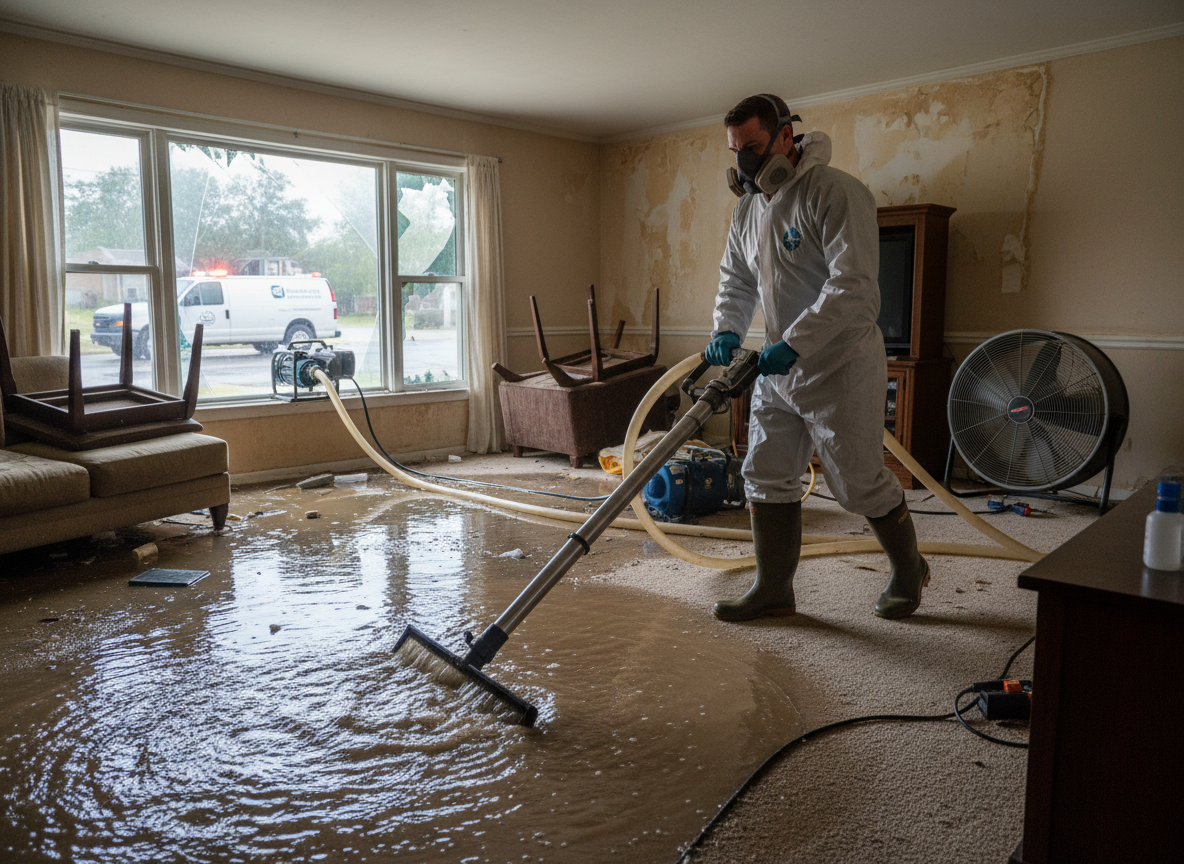
Wilmington's older housing stock near the Port of Los Angeles often features raised foundations and crawl spaces that trap water after even modest leaks from aging pipes. Rapid water extraction must account for the area's mild Mediterranean climate with dry summers that can hide slow moisture buildup until drywall and subfloors are already compromised. Technicians use truck-mounted pumps and moisture meters to pull standing water before it migrates toward Banning Park neighborhoods where soil retains humidity longer than expected.
Edge cases arise when extraction reaches the Wilmington Waterfront Park vicinity and properties sit on slightly lower terrain that funnels runoff from nearby Carson streets. In these situations crews must stage equipment on narrow driveways common to pre-1960s homes while monitoring for hidden voids under kitchen slabs. Failure to extract fully here leads to mold growth within 48 hours despite the dry summers that normally discourage visible dampness.
Los Angeles County building practices in the Banning Park area mean many structures lack modern vapor barriers, so extraction teams document every layer removed to satisfy insurance adjusters familiar with port-related humidity intrusion. Portable extractors handle tight laundry rooms where full truck access is blocked, and crews always test for electrical hazards first given the age of wiring in these blocks.
Technician insight
In Wilmington the thing that catches most people out with rapid water extraction is the way older port-area homes near Banning Park trap water under slabs because the mild dry summers keep surface signs hidden until floors start buckling.
Crawl Space Flood After Pipe Burst
Water from a burst line under a 1950s home near Wilmington Waterfront Park had migrated into the crawl space. We found saturated insulation and hidden pockets along the foundation that meters missed at first glance. Extraction with portable units plus targeted drying prevented mold from reaching the main floor and restored safe moisture levels within three days.
How it works
- 1
Initial Assessment
Technicians arrive within hours and map water spread through floors and walls using meters while noting access limits typical of Wilmington lots.
- 2
Water Removal
Truck-mounted and portable pumps extract standing water from crawl spaces and slabs before it reaches neighboring properties in the Banning Park area.
- 3
Drying Setup
Air movers and dehumidifiers are positioned to target hidden moisture pockets created by the mild climate and older construction methods.
- 4
Final Verification
Moisture readings confirm dryness across all affected materials, with documentation provided for Long Beach and Carson area insurance claims.
Pricing
Pricing varies with water volume, access challenges in older Downtown Wilmington homes, and whether hidden crawl space moisture requires extra equipment.