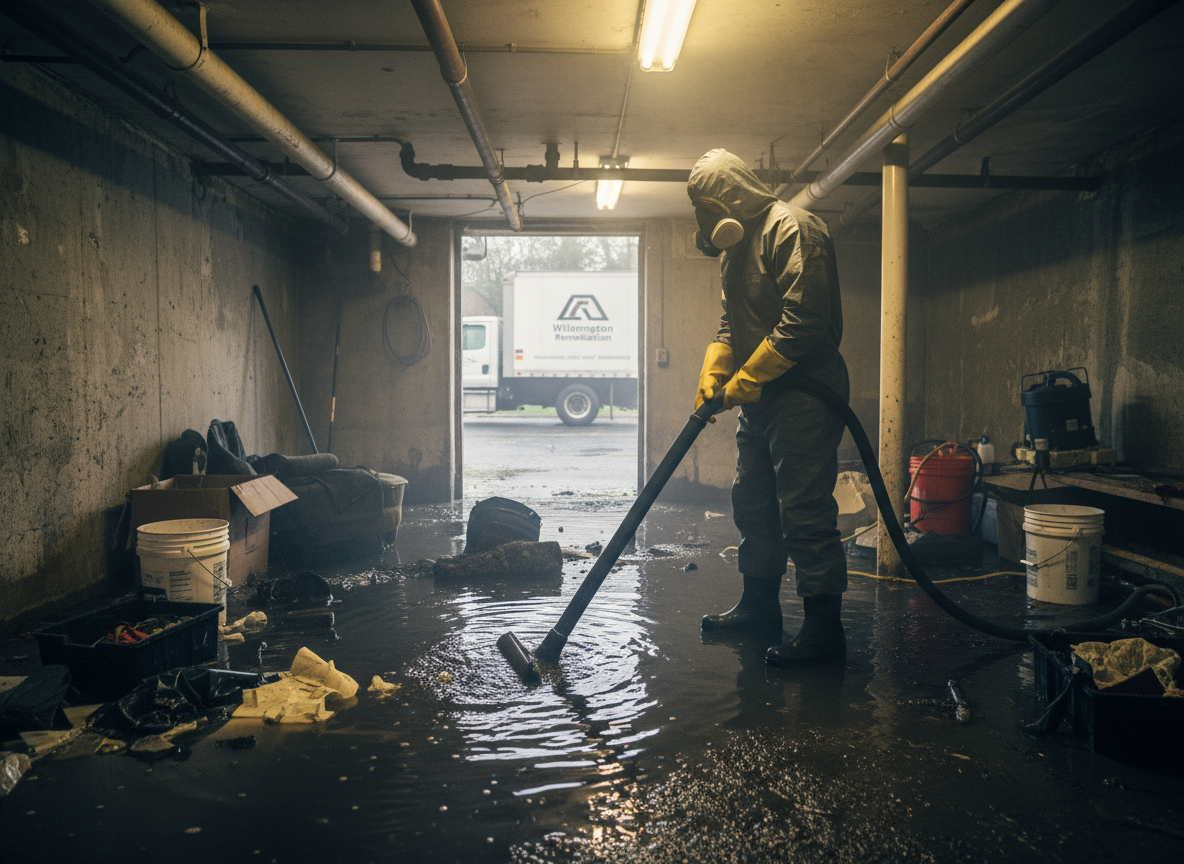
Sewage backups in Wilmington often trace to aging clay or cast-iron lines in Downtown Wilmington and Banning Park area homes built before the 1960s. These pipes sit close to mature tree roots from Banning Park that push through joints during the long dry summers typical of the mild Mediterranean climate. When a clog forms, waste can migrate under slabs or into crawl spaces common in the local housing stock, requiring full removal of affected soil and subflooring rather than surface cleaning alone.
Proximity to the Port of Los Angeles and Wilmington Waterfront Park adds another layer. High water tables and occasional tidal influence can push groundwater into compromised sewer laterals, turning a simple clog into widespread contamination across multiple rooms. Technicians must map the exact flow path using moisture meters because the flat terrain around Carson and Long Beach boundaries lets effluent travel farther than homeowners expect before it surfaces.
Los Angeles County health rules require documented removal of all porous materials that contacted Category 3 water, including baseboards and insulation. In practice this means cutting drywall at least 18 inches above the visible water line and disposing of carpet padding on the spot. Crews also ventilate aggressively because the dry summer air can mask lingering odors until humidity rises again.
Local Factors Affecting Sewage Jobs
Wilmington's combination of older plumbing, park-adjacent roots, and near-port water tables means most jobs involve hidden migration under slabs rather than obvious floor spills. Dry summers delay visible signs until the first rain, so homeowners often discover problems only after odors reach living areas.
Technician insight
In Wilmington, the thing that catches most people out with sewage cleanup is how quickly effluent travels under the flat lots in the Banning Park area once it escapes old clay lines. Dry summers keep the problem hidden until the first rain pushes it into living spaces, and homeowners often try bleach first, which only drives contamination deeper into the soil.
Downtown Wilmington Backup After Dry Spell
A homeowner in Downtown Wilmington noticed odors rising through floor vents after the first fall rain. Inspection showed waste had traveled under the slab from a root-clogged lateral tied to Banning Park trees. We removed saturated subfloor sections, treated the soil, and dried the space for five days. The property passed clearance testing with no lingering odor.
How it works
- 1
Assessment and Containment
Technicians arrive within hours, isolate the affected zone, and test for hidden moisture in walls and under floors common in Wilmington's older homes.
- 2
Extraction and Removal
All standing waste and saturated materials are removed immediately, including any soil or subfloor sections impacted by root intrusion near Banning Park.
- 3
Cleaning and Antimicrobial Treatment
Hard surfaces receive EPA-registered disinfectants; air scrubbers run continuously to address the dry climate's tendency to trap odors.
- 4
Drying and Verification
Industrial drying equipment stays in place until moisture readings match unaffected areas, followed by clearance testing before reconstruction begins.
- 5
Final Documentation
Photos and moisture logs are provided for insurance and county health records before the space is returned to use.
Pricing
Cost depends on square footage affected, depth of migration under slabs, and whether root-damaged lines require excavation near park trees.