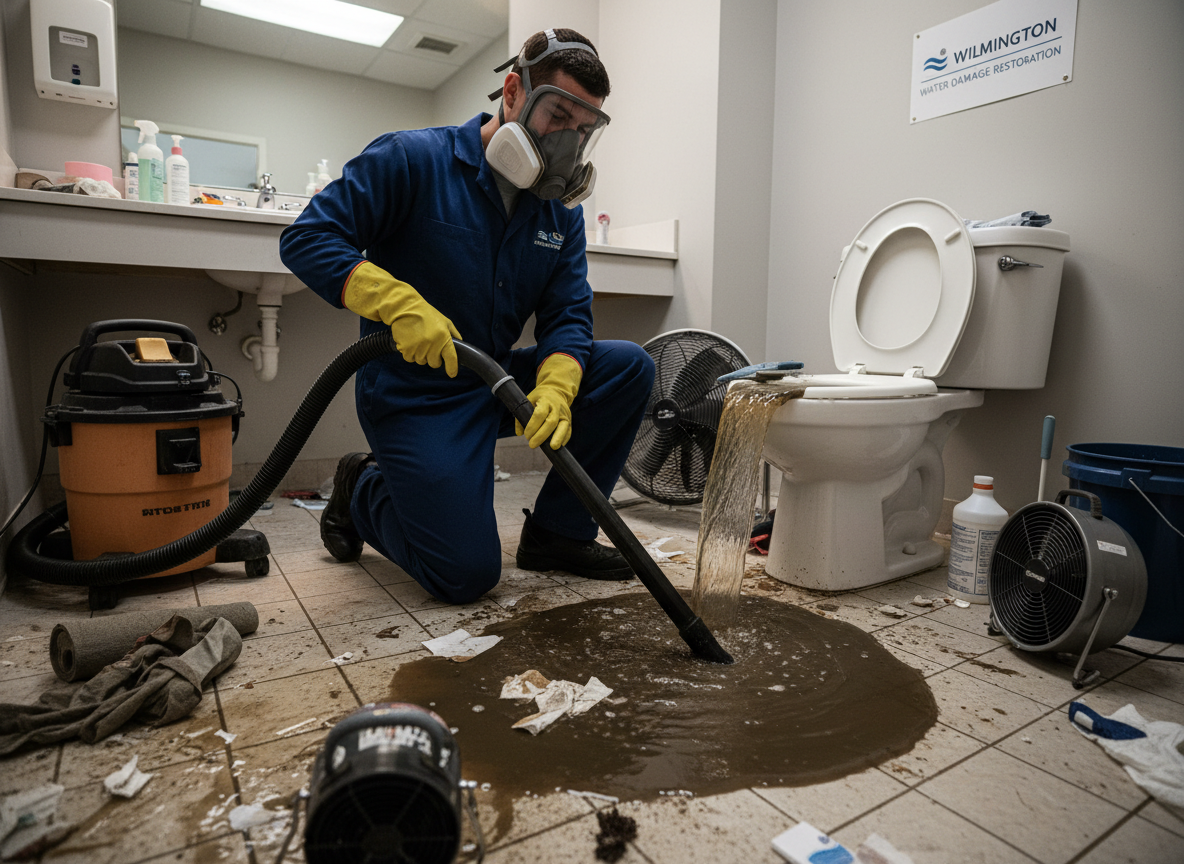
Toilet overflows in Wilmington often involve older cast-iron or galvanized lines common in housing stock built before the 1970s near the Port of Los Angeles. Water can quickly migrate under tile or into subfloors, especially in single-story homes around Downtown Wilmington where slab foundations meet clay-heavy soil. Technicians must pull baseboards, check for hidden moisture behind cabinets, and use moisture meters to map saturation before any drying begins.
Mild Mediterranean summers mean low humidity helps drying once extraction starts, yet the dry season also increases root intrusion from Banning Park trees into sewer laterals. This creates repeat backups if the line is not addressed. Crews isolate the affected bathroom, remove contaminated carpet pads or vinyl, and apply EPA-registered antimicrobials rated for Category 3 water. Homeowners should avoid walking through standing water, as it spreads bacteria into hallways and adjacent rooms.
In the Banning Park area, narrow lots and shared driveways limit equipment placement, so portable extractors and air movers are staged inside rather than on trucks. Electrical panels in pre-1960 homes may not support multiple dehumidifiers, requiring careful load management. Final clearance includes checking under toilets for cracked wax rings and confirming no residual moisture remains in wall cavities before reinstallation.
Technician insight
In Wilmington, the thing that catches most people out with toilet overflow cleanup is the combination of older clay sewer lines and tree roots from Banning Park that push backups into slab homes during our dry summers. Homeowners often mop the visible water and think the job is done, but moisture trapped under the toilet flange or behind the vanity then feeds mold weeks later.
Overflow Behind Vanity in Downtown Wilmington
A homeowner in a 1960s house near Wilmington Waterfront Park called after a toilet overflow reached the hallway. We found water had wicked under the vanity and into the subfloor because the original drain line had settled. Extraction and targeted drying prevented the need to replace the entire bathroom floor.
How it works
- 1
Initial Assessment
Arrive within the hour, identify water category, and map affected rooms using moisture meters.
- 2
Water Extraction
Remove standing water from floors and under cabinets with truck-mounted or portable pumps.
- 3
Contaminated Material Removal
Dispose of soaked carpet, pad, and baseboards while containing odors and bacteria.
- 4
Drying and Monitoring
Place air movers and dehumidifiers, then check moisture levels daily until readings normalize.
- 5
Sanitization and Clearance
Apply antimicrobials and confirm the space is dry before allowing re-entry.
Pricing
Pricing depends on square footage affected, depth of water into subfloor, and whether sewage lines require camera inspection.