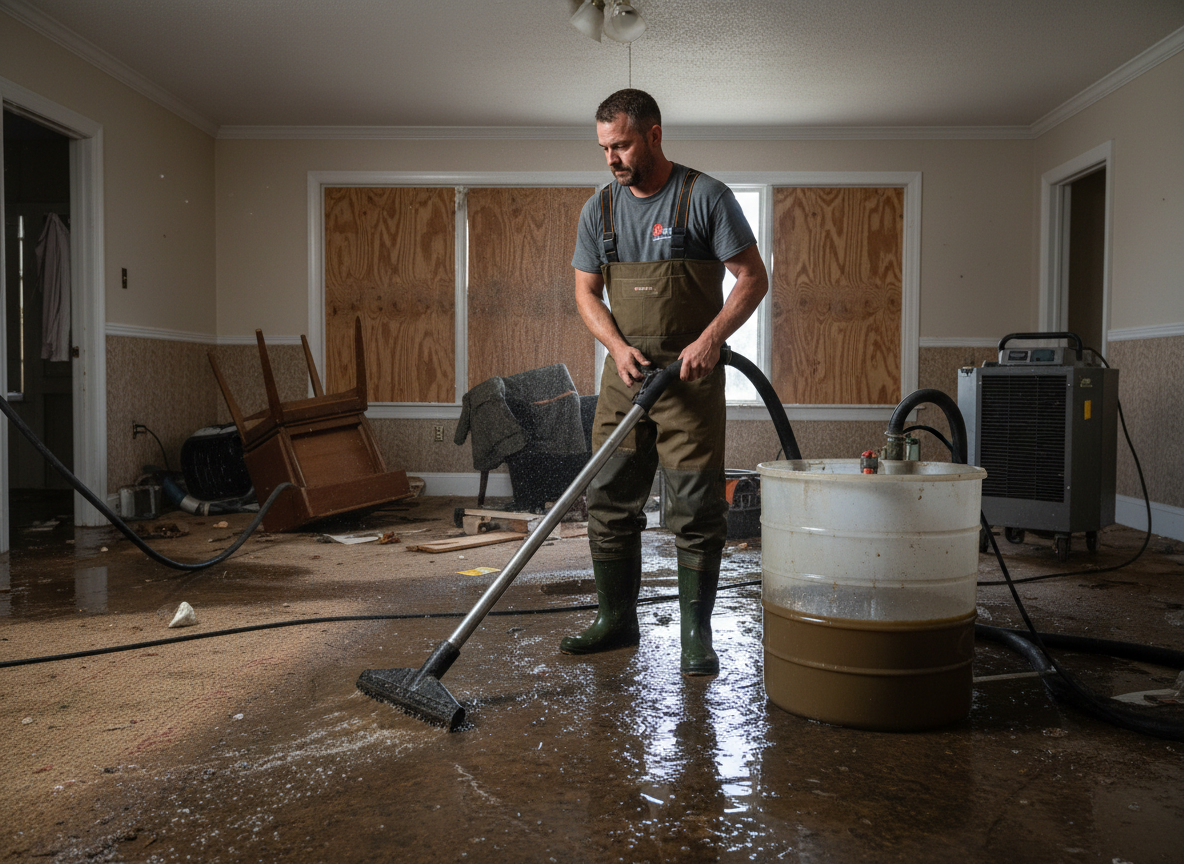
Wilmington sits in Los Angeles County with a mild Mediterranean climate that brings dry summers but still sees water intrusion from aging pipes, port humidity, and occasional winter storms. Homes in the Banning Park area and Downtown Wilmington often date to the 1940s through 1960s, featuring raised foundations or crawl spaces where water migrates quickly into subflooring and insulation. Extraction crews must account for these older materials because trapped moisture leads to hidden mold growth within days even when surface water appears removed.
Work near the Port of Los Angeles and Wilmington Waterfront Park frequently involves commercial buildings and residential properties exposed to salt air that accelerates corrosion in plumbing and HVAC systems. Extraction equipment must handle both clean and contaminated water from these sources, and crews check for hidden pockets behind stucco or in slab-on-grade homes common along the Carson border. Failure to pull every gallon the first visit means return trips that double labor costs for property owners.
Technicians map moisture with meters before starting pumps and air movers because the flat terrain around Banning Park allows water to spread laterally under flooring. Long Beach traffic patterns can delay equipment arrival, so local crews stage trucks at the 500 Delaware Ave base for quicker deployment. Proper extraction prevents secondary damage to electrical systems and drywall that older Wilmington stock cannot easily replace.
Technician insight
In Wilmington, the thing that catches most people out with water extraction is how quickly moisture travels under the older raised foundations in the Banning Park area during our dry summers; homeowners often stop at visible puddles and miss the salt-air corrosion that lets water keep wicking into joists for weeks.
Crawl Space Extraction After Pipe Leak
A homeowner in Downtown Wilmington called after a bathroom supply line burst and water spread under the house. We found standing water plus saturated insulation along the foundation near Banning Park. Extraction and targeted drying prevented mold from reaching the living areas above, and the home was cleared within four days.
How it works
- 1
Arrival and Assessment
Crew arrives within hours, locates the water source, and uses moisture meters to map affected zones in crawl spaces or slabs common in Downtown Wilmington homes.
- 2
Water Removal
Industrial pumps and vacuums extract standing water from carpets, hardwood, and concrete while protecting nearby structures at the Port of Los Angeles edge.
- 3
Drying Setup
Air movers and dehumidifiers are positioned to pull remaining moisture from walls and subfloors, with daily checks to avoid over-drying sensitive older materials.
- 4
Final Verification
Moisture readings confirm the structure is dry before equipment removal, with documentation for insurance claims on properties near Banning Park.
Pricing
Cost depends on water volume, number of affected rooms, and whether hidden moisture exists in crawl spaces or behind walls.